Film Reviews & Reflections
Indokino
A collective voice on cinema.
Film Reviews & Reflections
A collective voice on cinema.
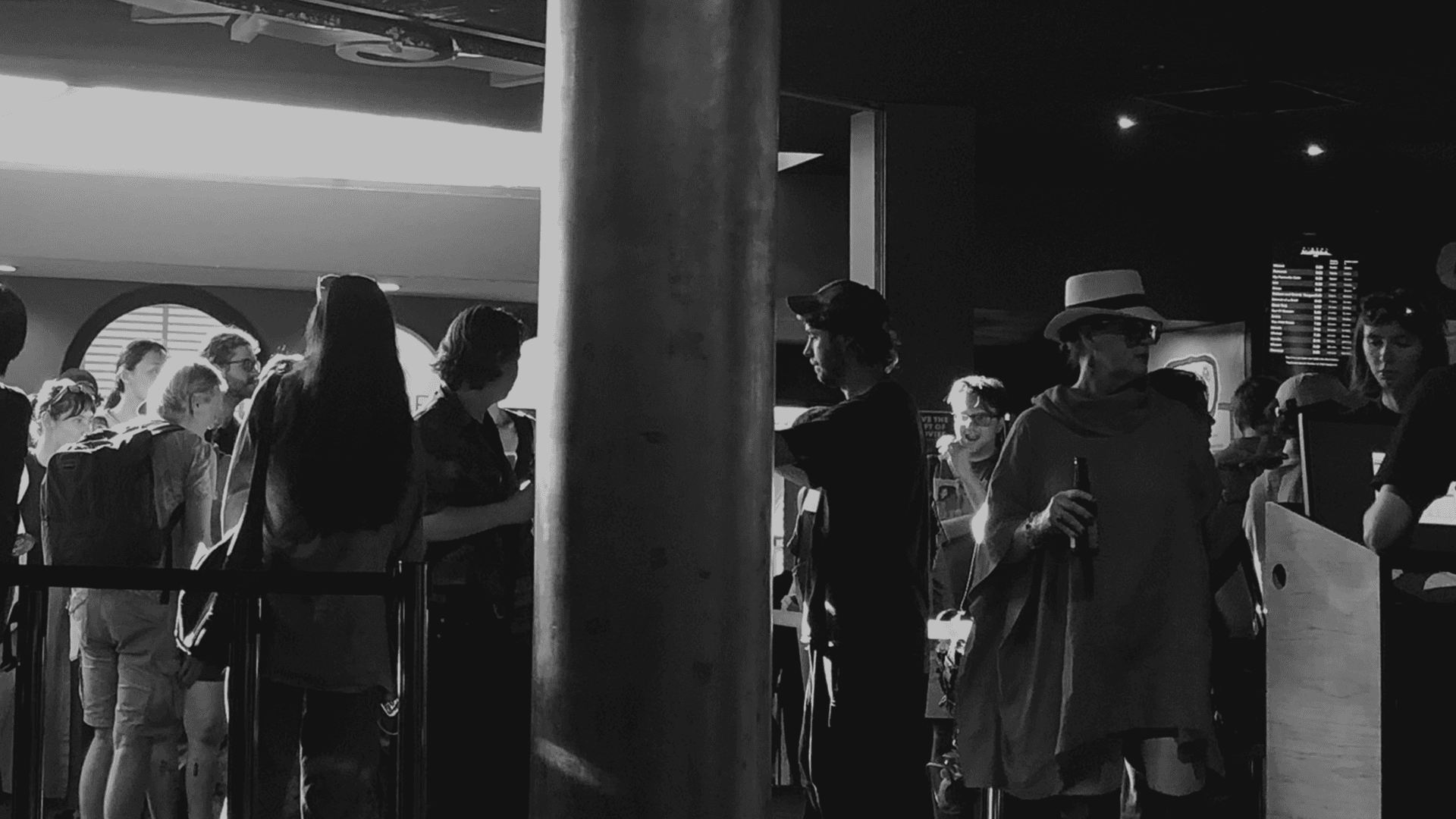
The year is 2020.
The pandemic has brought the world to a standstill. Theaters are closed. Productions are halted, and the future of cinema has never felt more uncertain. Streaming rapidly becomes the industry's new frontier, while short-form content dominates the digital landscape. Everything is becoming shorter, faster, optimized for the next swipe.
Then came Tenet.
Against the advice of many in the industry, Christopher Nolan insisted that Tenet be experienced in theaters. It was a gamble during the pandemic—not simply on box office returns, but on a conviction. Conceived for the scale and immersion of the theatrical experience, Tenet was never intended to be just another title in a streaming library. Nolan wasn't rejecting streaming as a medium. He was defending the idea that some films are inseparable from the way they are experienced: in a dark auditorium, on the largest screen possible, with hundreds of strangers giving their undivided attention to the same story.
A year later came Dune. At a time when the industry was still debating the future of theaters, Denis Villeneuve delivered an epic that refused to compromise. Rather than condensing Frank Herbert's novel into a single film, he chose to tell only half the story. Dune: Part One concluded just as Paul Atreides' journey was truly beginning, asking audiences to embrace an unfinished narrative and trust that the payoff would come years later.
They did.
When Dune: Part Two arrived, audiences returned—not merely to watch another blockbuster, but to continue a journey they had willingly left unfinished. In an era supposedly defined by shrinking attention spans, millions proved they were still willing to wait for a story worth returning to.
Then it happened again.
Top Gun: Maverick.
After two years of watching everything from the comfort of home, audiences made a conscious choice to leave it. They weren't simply buying a ticket; they were deciding that some experiences still belonged in theaters. The question was no longer whether cinemas would survive. It had become far more personal:
What is worth leaving home for?
By 2023, cinema had become more than a destination. It had become a conversation again.
Oppenheimer. Barbie. The Boy and the Heron. Killers of the Flower Moon.
These films differed in genre, tone, and ambition, yet they shared one remarkable quality: they demanded time, attention, and presence.
Then came Barbenheimer.
It wasn't merely a meme born from internet culture. It was a collective ritual. Audiences planned double features, filled IMAX theaters, dressed for the occasion, and spent weeks discussing what they had seen. Moviegoing was no longer just an evening's entertainment. It had become a shared cultural experience once again. By the time Oppenheimer became a global phenomenon, the old assumption—that younger audiences would never sit through a three-hour film—had quietly begun to collapse.
Looking back, these weren't isolated successes. They were evidence.
The generation raised on TikTok is also filling IMAX theaters. At first glance, it seems like a contradiction. But perhaps it isn't.
Perhaps Gen Z values immersion precisely because it knows distraction so intimately. Growing up in an age of infinite scrolling may have made uninterrupted attention feel not obsolete, but increasingly precious. In a world designed for endless consumption, experiences that ask us to slow down, commit, and remain fully present have become remarkably rare.
Today, The Odyssey arrives not as an exception, but as the culmination of everything that came before. Sold-out theaters and packed auditoriums no longer feel surprising. They feel like the natural consequence of audiences repeatedly demonstrating that they will invest their time when an experience earns it.
The resurgence of long-form cinema suggests our capacity for sustained attention never disappeared—it simply awaited experiences worthy of it.
Are we witnessing the beginning of a post-algorithm culture—one where people aren't rejecting technology, but rediscovering experiences that reward sustained attention?
Maybe cinemas have become one of the last places where strangers willingly surrender their phones.
Further reading: Christopher Nolan's 2020 essay in The Washington Post on preserving the theatrical experience: The Washington Post Essay